
Trees are a fantastic resource – a versatile building material and one of the planet’s most important carbon sinks. The world needs more forests, and it needs them fast. But planting trees by hand is both time-consuming, physically demanding and in many places also hazardous. A growing global shortage of manual planters has made mechanized planting increasingly necessary.
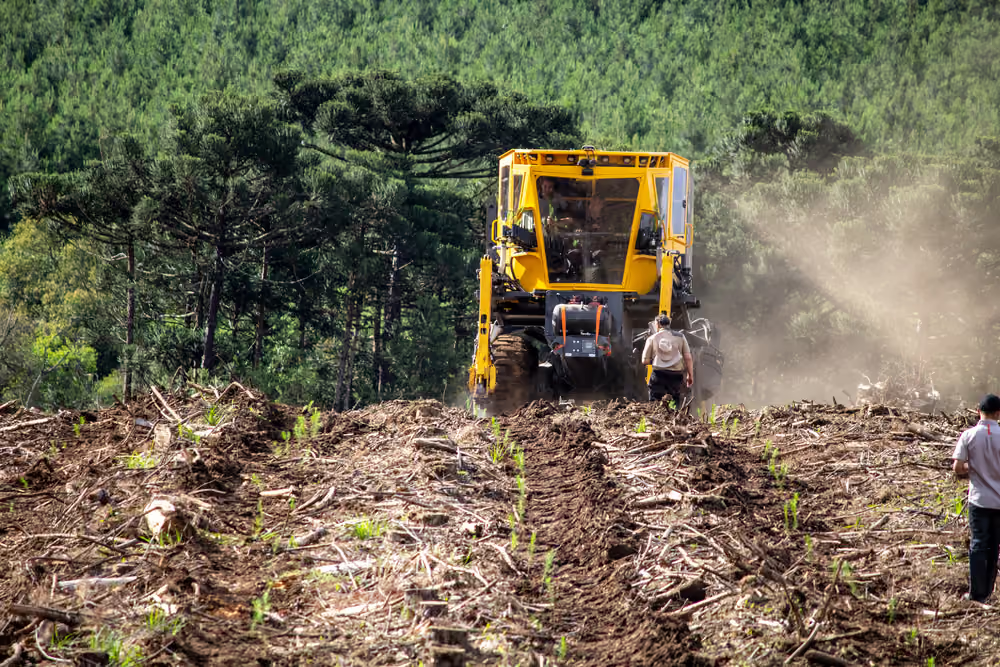
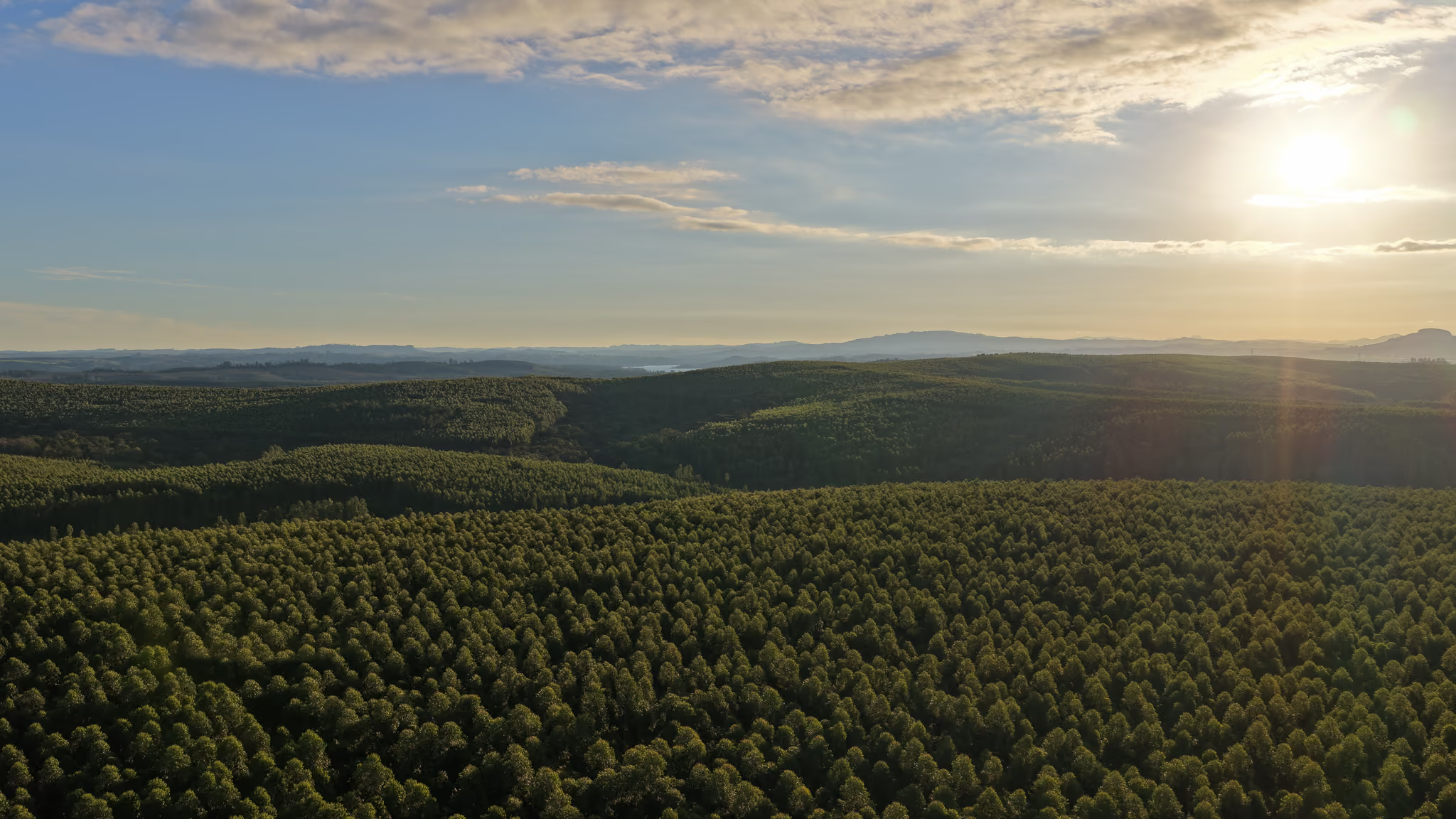
Reforestation – the restoration of forest on land that was previously forested – is a cornerstone of sustainable forestry worldwide.
Similarly, afforestation – the establishment of forests on land that has not recently been forested – has become an increasingly important measure for combating desertification and enhancing wildlife habitats.
Forests can regenerate naturally or be established through the planting of seeds or seedlings. Natural regeneration depends on the availability of nearby seed sources and is slow and unreliable compared to planting. Active reforestation efforts are therefore an essential component of modern forestry and play a key role in offsetting the effects of deforestation.
The world has pledged to restore hundreds of millions of hectares of forest. Governments, companies, and coalitions have committed to some of the most ambitious land-restoration targets in history.
The Bonn Challenge aims to bring 350 million hectares of degraded land into restoration. The EU has pledged three billion additional trees by 2030. Brazil’s PLANAVEG program targets 12 million hectares of restored native vegetation. Corporate net-zero strategies across pulp, paper, packaging, and energy depend on new, verifiable forest growth.
A growing forest removes carbon dioxide from the atmosphere and stores it in wood, roots, and soil – at industrial scale, with technology that has existed for 350 million years. Unlike engineered carbon capture, reforestation works today, at a cost per tonne that no machine-based alternative matches, while also delivering timber, biodiversity, water regulation, and rural employment.
But a forest only sequesters carbon if the seedlings survive. And seedlings only get planted if someone — or something — puts them in the ground, in prepared soil, at the right depth, at the right time. That is the step where global ambition currently breaks down.
Pledged under the Bonn Challenge
Pledged by the EU by 2030
Targeted by PLANAVEG program
Reforestation targets are counted in billions of seedlings per year. The workforce that plants them is shrinking on every continent. Manual planting is heavy, repetitive, seasonal work, and fewer people are willing to do it each year — in Sweden, in Canada, in Brazil alike.
The result is a widening gap between the area that should be replanted and the area that actually is. Harvested land waits longer for regeneration. Land damaged by fire, storm, and insect outbreaks waits longest of all. Every year of delay is a year of lost growth — and lost carbon uptake.
Reforestation at the scale climate and society require is not a manual task with mechanical assistance. It is an industrial process that happens to involve living material. It demands the same things every industrial process demands: throughput, consistent quality, data, logistics, and machines that work every scheduled hour.
That is the perspective Plantma Forestry was founded on. Our PlantMax system prepares the soil, plants the seedling, compacts around it, and records the data — in one pass, at a pace of up to 3,000 seedlings per hour. The technology has been rapidly adopted worldwide and is now in commercial use on four continents.
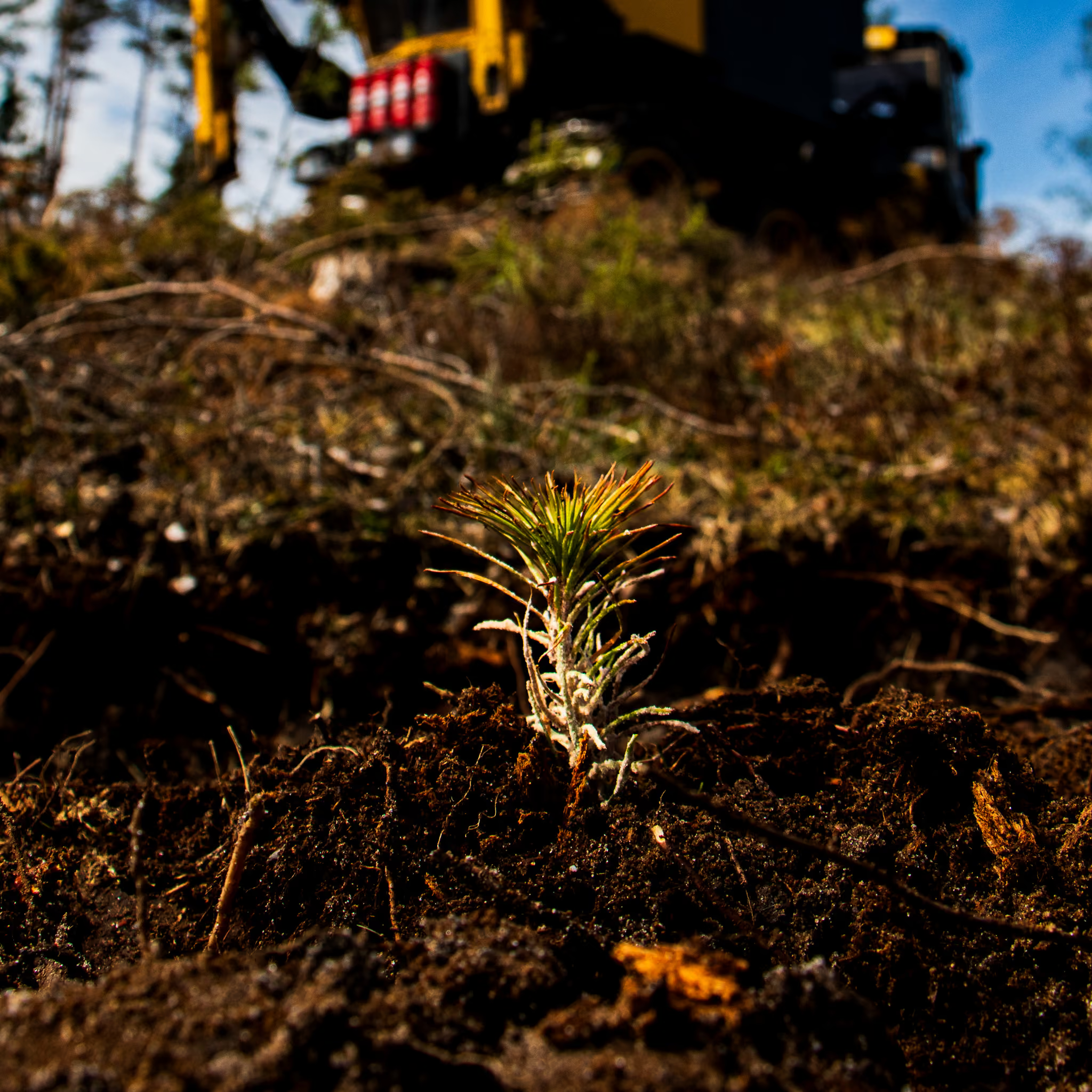

PlantMax units are currently in commercial operation in Sweden, Brazil, Canada, New Zealand, and Australia – planting containerized pine in the Nordics, eucalyptus at plantation scale in Brazil, and bareroot stock in Canadian salvage programs. In Brazil – one of the world’s most demanding forestry markets – PlantMax is used on 70 percent of all mechanized reforestation. That level of adoption doesn’t come from promises. It comes from performance.
Want to see how mechanized reforestation works in practice?
Reforestation is the re-establishment of forest through planting and/or deliberate seeding on land classified as forest.
Afforestation is the establishment of forest through planting and/or deliberate seeding on land that, until then, was under a different land use.
Definitions Food and Agriculture Organization (UN)
The time it takes for a reforested area to become a mature forest depends on the local climate, soil conditions, tree species, and how the forest is managed. In fast-growing tropical regions, a forest may develop many of its structural characteristics within 20–40 years. In temperate regions, this typically takes 50–100 years, while in boreal forests it may take well over a century.
Mechanization is not just the future of large-scale reforestation. In Sweden, Brazil, Australia and Canada, it is already a reality.